


Food businesses today need tableware that can handle real-world serving needs while also matching what customers want in terms of packaging and being good for the environment. Catering companies, restaurants, cafés, cloud kitchens takeaway places, event planners and food stores all have needs but they all have one thing in common: they need food-serving products that work well and can be used in big amounts. Sugarcane Bagasse Plates have become a choice more and more businesses are looking at because they are made from sugarcane fiber and come in sizes, shapes and styles.
Bagasse tableware is not just for plates. The broader group includes Bagasse Bowls, Bagasse Trays, Bagasse Food Containers, Bagasse Meal Trays, Bagasse Clamshell Containers and other food packaging items. This means a food business can use items for meals, snacks, takeout orders, desserts and packed food. For caterers this choice can be really helpful when serving people quickly.
Picking disposable tableware should not be based only on if a product is called eco-friendly. Businesses also need to think about if the food will work with the item, the size of the plate how the food is served how many are needed how to store them how to move them how reliable the supplier is and what to do with them after. Knowing these things can help a business choose the right Bagasse Plates, for Catering and other products that fit what they really need.
What Are Sugarcane Bagasse Plates?
Sugarcane Bagasse Plates are plates that you use once and then throw away. They are made from bagasse. Bagasse is the part left behind after sugarcane is processed and its juice is taken out. This fiber can be cleaned. It can be made into pulp. Then it is shaped into forms. Finally it is turned into plates for serving food. The plates are made for using with food. They come in sizes and ways they can be arranged.
Using sugarcane fiber makes these plates different from plastic plates. These plates are mostly made from plants of oil-based plastic. That is why they are also called Sugarcane Fiber Products. They are also called Sugarcane Pulp Products. They are also called Sugarcane Fiber Plates. They are also called Bagasse Fiber Plates.
The material comes from nature. That is one reason why food businesses think about using bagasse plates when they are looking for plates. These plates can be used for usual food service situations. Their availability in shapes and sizes means they can fit different kinds of food.
For businesses that're big the products do not only include plates. Bagasse Bowls can be used when food needs a container. Bagasse Trays can offer space for food. For businesses that deliver food closed containers may be better, than plates.
What Is Bagasse and How Is It Used to Make Plates?
Bagasse is the part that stays after juice is taken out of sugarcane. Sugarcane is mostly used for its juice. The leftover fiber can also be used as a material for making some products. In the food-service industry this fiber is turned into items like plates and containers.
The way these items are made usually starts with preparing the sugarcane fiber turning it into a pulp and then shaping that pulp into the form needed. Heat and pressure are used while forming and drying to make sure the product has the structure. Depending on how the product's designed the same basic material can be made into plates, bowls, trays, boxes and other types of packaging.
This is why people might see names for similar products. Words like Sugarcane Pulp Plates, Bagasse Pulp Plates, Sugarcane Fiber Thattu and Bagasse Thattu might be used in places or by different customers. These other names can help when looking for suppliers in areas where local names are often used along with English names.
The finished product is meant for use, in the food-service industry. Not all bagasse products are exactly the same. Thickness, shape, size, how well they are. What they are used for can be different. Businesses that serve food should choose products based on what they need instead of thinking all bagasse products will work the same way.
Why Are Bagasse Plates Becoming Popular in Catering?
Catering involves more than just cooking. A Catering team must carry food and tableware set up serving stations, oversee staff serve guests in a time and clean up after the event. At functions a tiny choice about tableware can change how fast the whole operation runs.
This is why Bagasse Plates for Catering have drawn attention. Bagasse Plates for Catering give a single‑use serving style that can be carried and set up without the washing needed for plates. After serving the used tableware can be gathered according to the event’s waste‑management plan.
The natural fiber mix is another reason. Event planners and food businesses that want to cut back on plastic items may look at Eco Friendly Disposable Plates made from plant‑based materials. The natural look of bagasse items can fit well with meals, casual get‑togethers, outdoor gatherings and modern food‑service setups.
Catering companies also gain from having kinds of products. A catering manager may need flat plates for a full meal smaller plates for snacks bowls for certain dishes and compartment plates for packed lunches. Having Bagasse Plates, for Catering forms lets the catering manager pair the right item with the menu.
This does not mean that one single disposable item fits every Catering case. The best choice still depends on the food type, portion size, event length, transport needs, budget and how waste will be handled.
What Are the Main Benefits of Sugarcane Bagasse Plates?
One of the reasons businesses look at bagasse is the material itself. Sugarcane fiber is a plant-based material that can be shaped into useful food-serving products. For businesses trying to improve their packaging practices Sustainable Bagasse Products can be part of a packaging plan.
Convenience is another advantage. Catering companies that serve groups can use disposable plates without needing the same amount of washing and storage space that reusable tableware requires. This can make event management easier at outdoor places where washing facilities might not be available.
Bagasse products come in different types. A food business can use Bagasse Dinnerware for serving meals while other products can help with takeout and packaging needs. Bowls can be used for foods that need depth trays can hold larger portions and sealed containers can be used for food delivery.
The look of the product can also be helpful. The natural fiber texture gives a look compared to plain plastic plates. For food businesses and events this can add to the overall experience of serving food.
Another point to think about is the availability of compostable choices. Biodegradable Bagasse Products and Compostable Bagasse Products are often sold for businesses that want plant-fiber food-service options. However businesses should check the details of the product and know what disposal options are available in their area, before making any environmental claims.
Can Bagasse Plates Be Used for Hot and Wet Foods?
Bagasse plates can work well for hot and wet food applications but only if the right product is chosen for the job. Catering menus often feature items like rice, vegetables, curries, fried foods, snacks, desserts and other dishes that may be hot or contain moisture. These kinds of foods demand a plate that can handle heat and liquid without breaking down.
The suitability of a bagasse plate depends on its design and specifications. A plate made for snacks might not hold up when used with soupy or saucy meals. That’s why businesses should test the plate with the food they plan to serve. It's not enough to assume one type will work for everything.
When serving dishes with liquid a deeper container usually makes more sense. Bagasse Bowls for Food are an option in these cases because they offer extra depth. Foods such as soups, gravies, rice dishes and desserts often benefit from being served in bowls than shallow plates.
Several factors matter—temperature, moisture how long the food will. The amount of food being served. Caterers must remember that not all bagasse plates behave the way. Some resist moisture better. Others may soften under heat.
For businesses that regularly serve meals it's important to check the supplier’s product details before buying in bulk. This helps avoid problems, like spills or ruined packaging. Taking time to review specs ensures the choice every time.
Which Foods Can Be Served on Bagasse Plates?
The range of foods that can be served depends on the plate design. Bagasse tableware can be used for common catering and food-service applications. A standard plate can be suitable for meals containing rice, vegetables, side dishes, snacks and desserts.
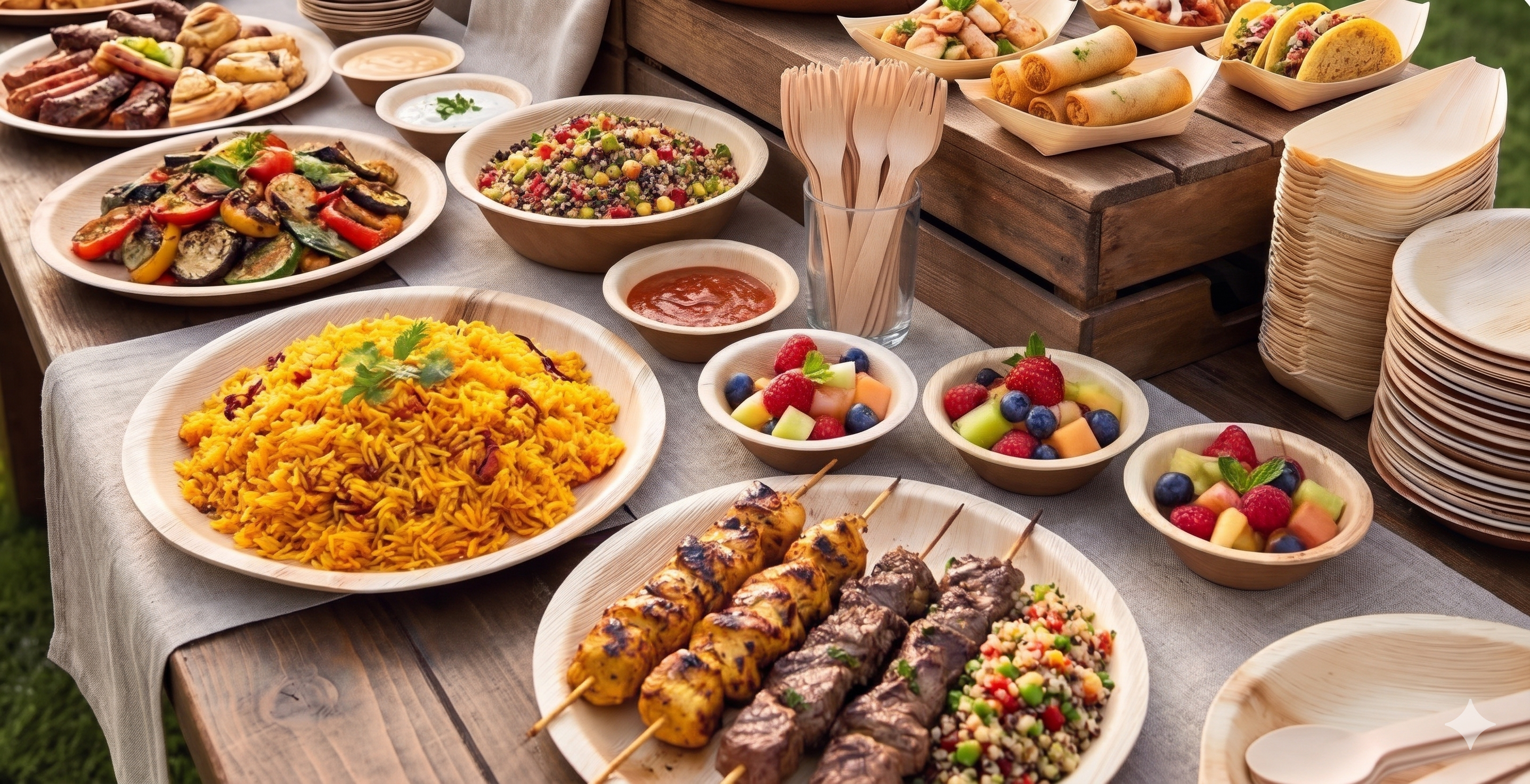
Restaurants may use plates for meals. Cafés can use sizes for snacks, bakery products and light meals. Catering companies may select plates for traditional meals or buffet service. Event organizers can use plates for food distribution where convenient serving and quick cleanup are important.
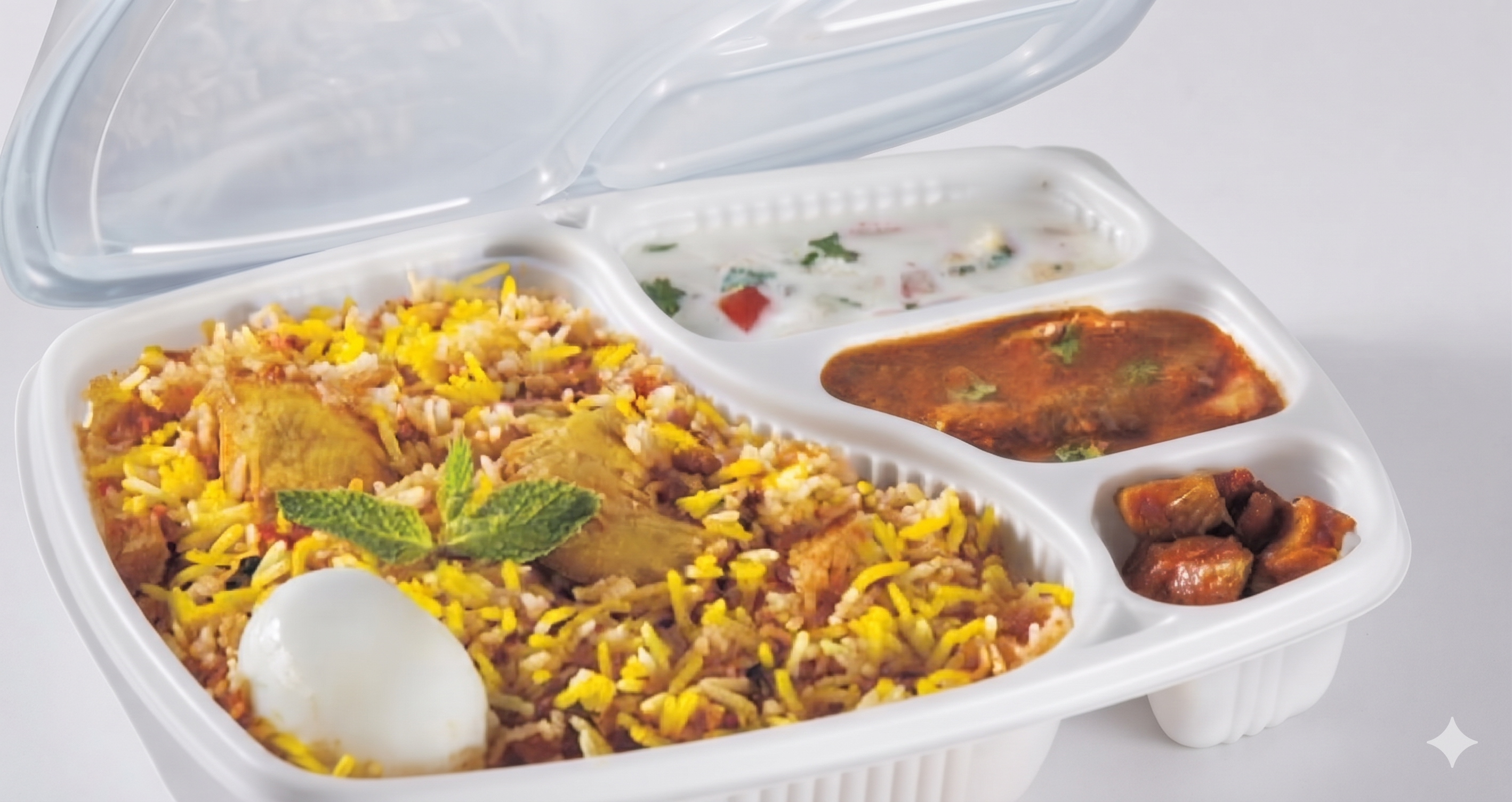
For food the requirements are different because the packaging needs to support transportation. In cases Bagasse Food Packaging and Bagasse Takeaway Containers may be more appropriate than an open plate.
Compartment plates are useful when different food items should remain separate. This can be particularly relevant, for combination meals, packed lunches, catering portions and institutional food service.
The important principle is to match the product to the food than selecting tableware based only on appearance. Food businesses should consider portion size, moisture, temperature, transportation and serving time before deciding which bagasse product to purchase.
What Bagasse Plate Sizes Are Available for Catering?
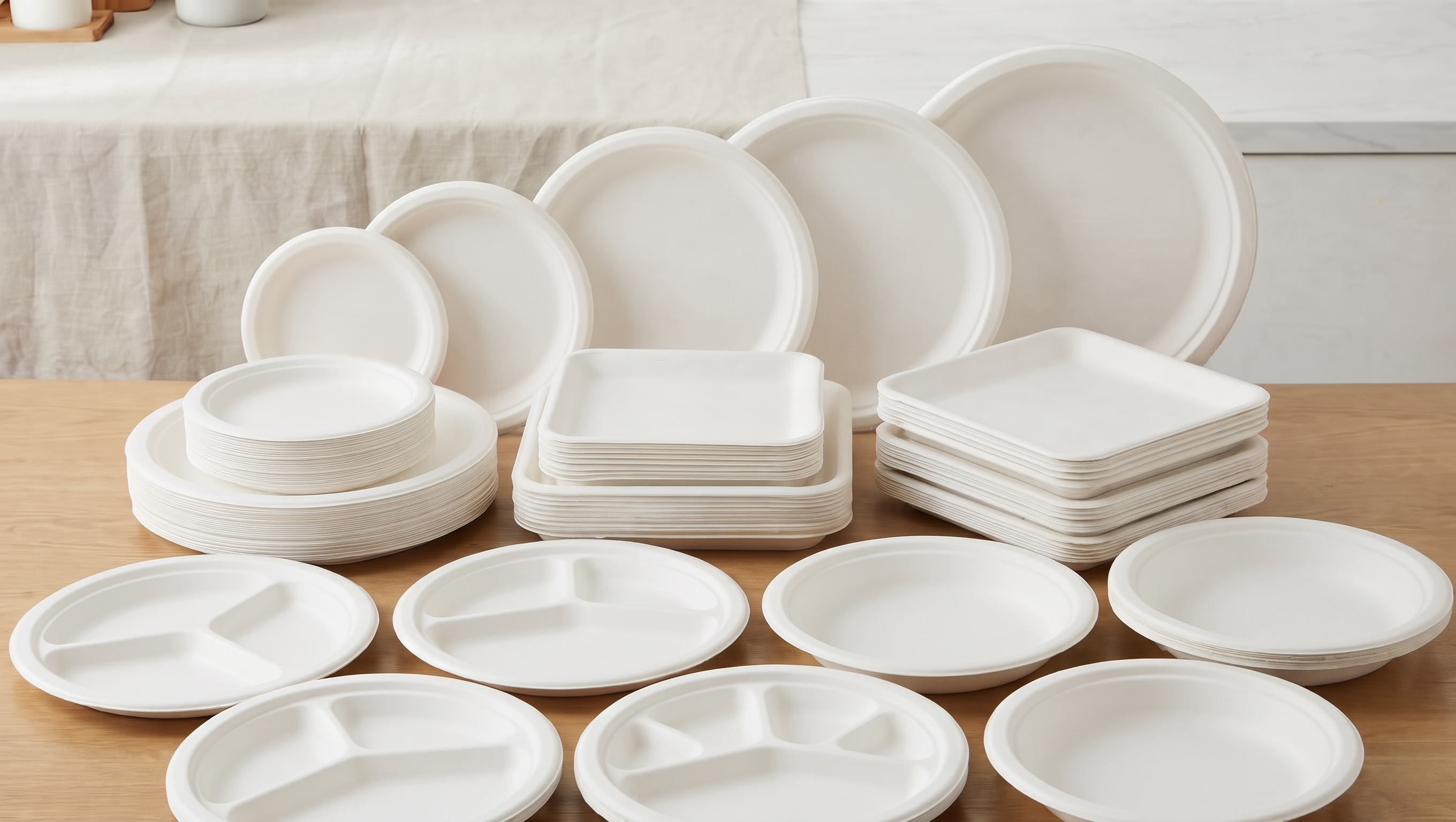
Bagasse plates come in sizes because food businesses serve many different portions and menus. Bagasse plates are often round or square. Bagasse plates can also be made in shapes to meet particular food‑service needs.
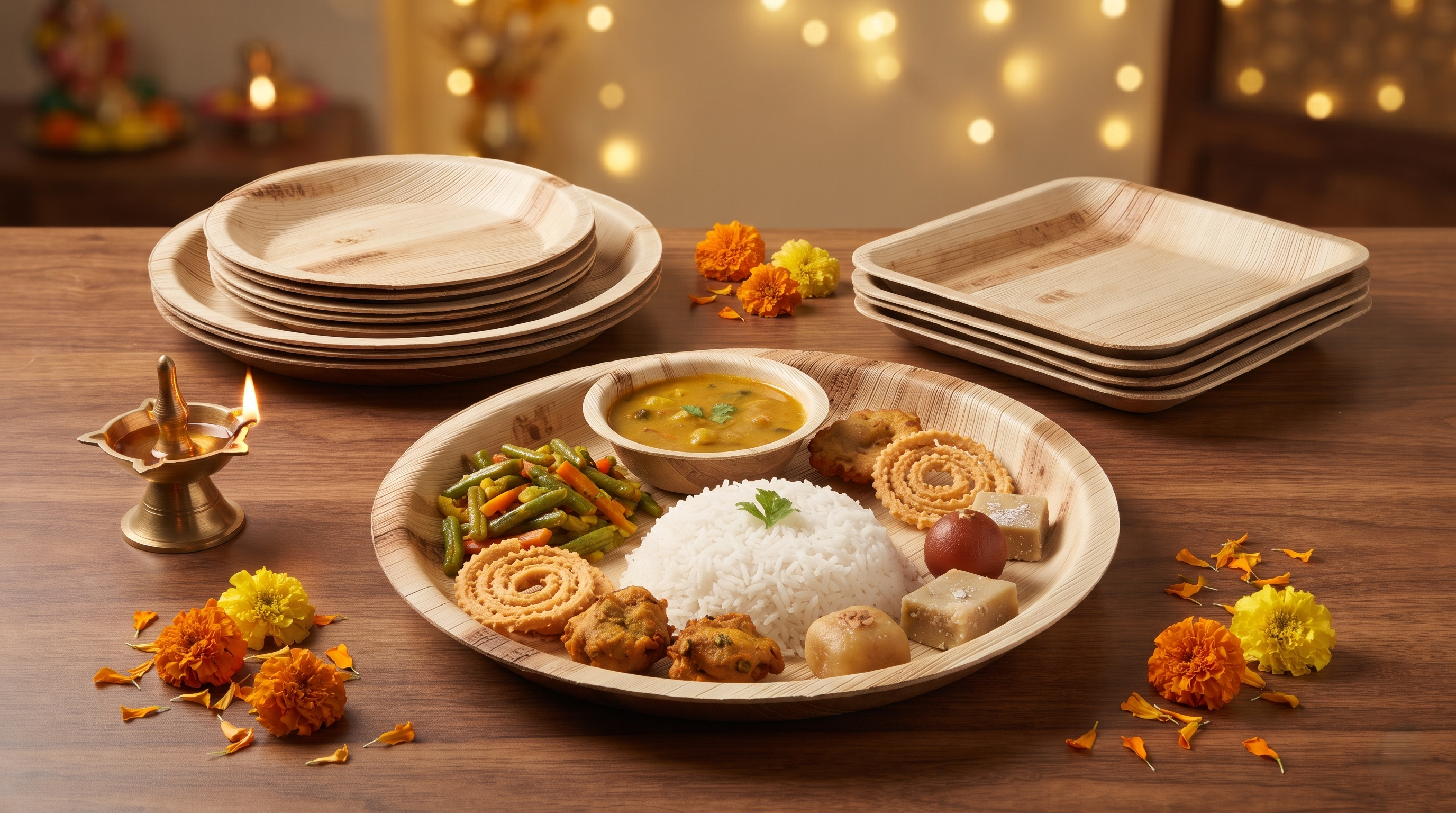
Round Bagasse plates fit well with meal serving because the round shape gives a familiar surface for food. Square Bagasse plates look different. Can be useful for snacks, meals or special event setups. Bagasse plates in each shape bring a feel to the table.
Bagasse plate size depends on the menu. A small Bagasse plate can hold snacks or desserts. A large Bagasse plate can hold a meal with many items. Using a Bagasse plate that matches the portion size keeps food presentation neat and tidy.
Catering businesses should look at the serving pattern before ordering Bagasse plates. If an event has a buffet with dishes a Bagasse plate must have enough space for guests to fill a Bagasse plate easily. If food is pre‑portioned, a smaller Bagasse plate or a Bagasse plate with compartments can be more efficient.
Businesses buying Bagasse plates must confirm that the needed sizes are always available. This is very important, for caterers who often manage weddings, corporate events and other regular projects.
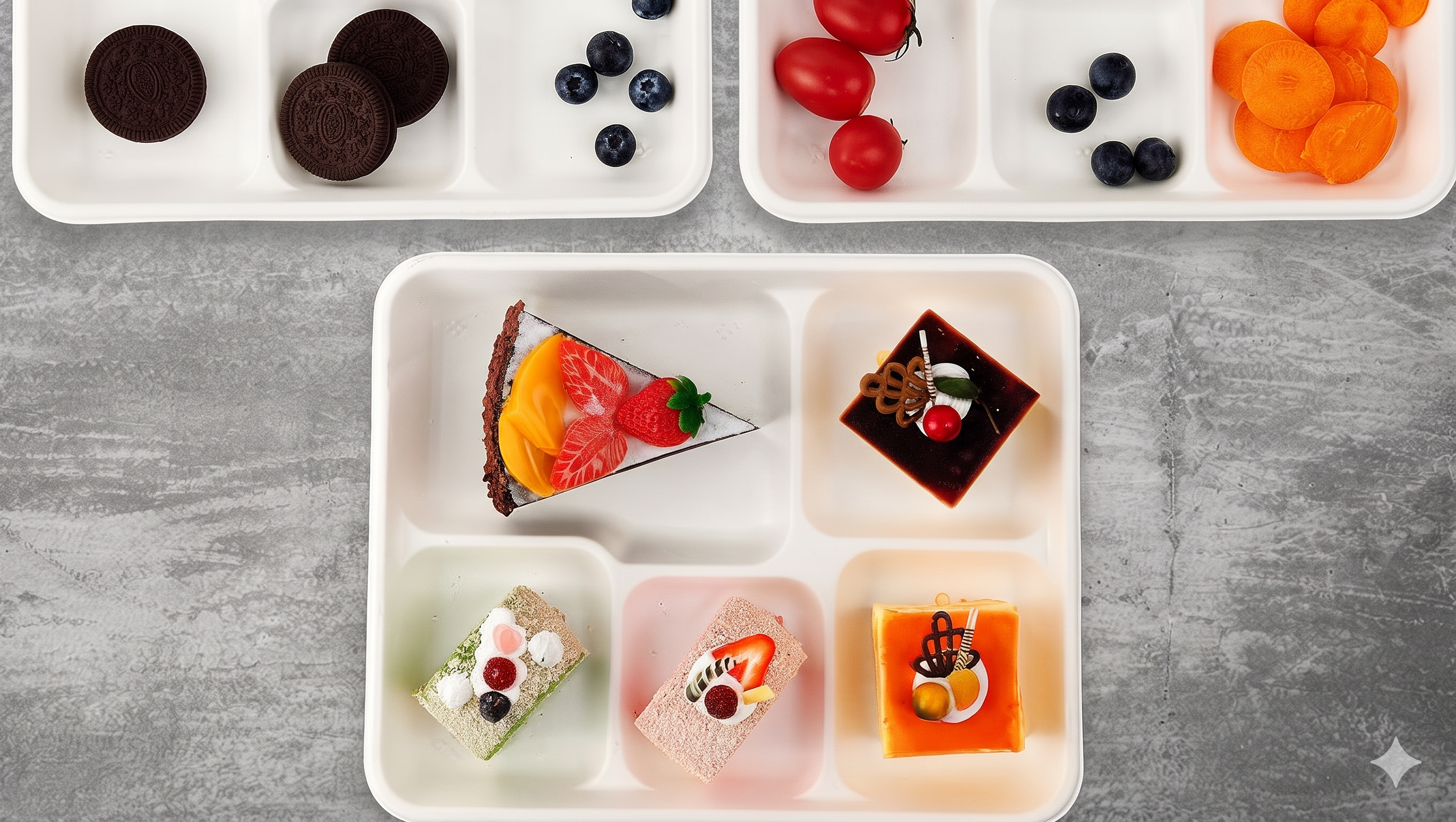
When Should You Choose Compartment Bagasse Plates?
Compartment plates are especially helpful when a meal has different food parts that need to be kept apart. Of using many small containers or putting everything on one big surface a compartment style lets each food item be in its own area.
Three compartment bagasse plates can be great for meals that have a dish and two other parts. Four and five section designs offer space to keep things separated when a meal has many parts. These items are also called three section bagasse plates, four section bagasse plates and five section bagasse plates.
For catering companies compartment plates can make it easier to prepare meals that are already portioned. They can be helpful for business lunches, school or group food service, packed meals, events and takeout options.
The number of compartments should be chosen based on the menu. A simple meal might not need a five compartment plate while a meal, with side dishes could use more sections.
Compartment products can also help businesses serve the amount each time. This can be useful when the same meal needs to be given out to people.
How to Choose the Right Bagasse Plate for Your Food Business?
Choosing a bagasse plate starts with knowing what the food business needs. A caterer who serves meals will have different needs than a café that sells snacks or a cloud kitchen that makes takeout orders.
Food type is the thing to think about. Businesses need to decide if they mostly serve food, wet food, full meals, snacks, desserts or a mix of these. This will help decide if a flat plate, a bowl, a tray or a container is the choice.
The way food is served is also very important. For dining in or at events an open plate might work fine. For takeout and delivery a closed container could keep the food safe while its being moved around. Bagasse containers for takeaway are an option, for businesses that need the food to stay covered.
Next choose the size and shape based on the portions. Businesses can look at square, rectangular or divided options depending on what they offer on the menu.
How much is needed is another thing to think about. A restaurant that uses plates every day may need a supply while an event planner might need a big order all at once. It's important to talk to the supplier about how much's needed before buying.
Lastly think about packaging, how to store the plates when they will be delivered if the products are the same each time and how reliable the supplier is. These things can really affect how the business runs every day.
How Many Bagasse Plates Do You Need for a Catering
Event?
The number of plates needed for an event depends on the number of guests and how the food is handed out. A simple way to start is by looking at the expected number of guests. Caterers should also think about extra needs.
If an event has 500 guests getting 500 plates might not be enough. There might be last-minute guests, people who need to replace their plates, staff who need to eat or plates that get broken. An extra supply can help avoid running out during the event.
The calculation also changes when different plates are used for parts of the event. For example a catering company might use one size of plate for snacks and a different size for the course. A smaller plate might be needed for dessert.
For events that happen often companies can keep estimates based on the size of the event. This makes it easier to create purchase orders, for events.
Companies that buy in amounts of Bagasse Products should also tell their supplier how many they need ahead of time. This helps the supplier understand what is needed and allows the company to manage inventory and delivery better.
Are Bagasse Plates Suitable for Restaurants and Takeaway Businesses?
Bagasse products fit food‑service businesses when the chosen product matches the use.
Restaurants, cafés, cloud kitchens, food stalls, catering companies and takeaway businesses can all use kinds of Bagasse tableware.
Restaurants may use plates and bowls for meals, snacks and desserts. Cafés may need serving items while cloud kitchens may concentrate on containers meant for delivery.
For takeaway businesses the packaging must protect food while it is transported. Bagasse Clamshell Containers, Bagasse Takeaway Boxes and Bagasse Hinged Containers can give sealed shapes for meals and other foods.
A business should think past the flat plate. A full Bagasse collection can include plates for serving, bowls for foods trays for larger portions and containers for takeaway.
This makes Bagasse Packaging Products useful not for caterers but also, for restaurants and food businesses that need packaging often.
Are Bagasse Plates a Better Alternative to Conventional Disposable Plates?
There is no one disposable plate that is perfect for every business. The best choice depends on the type of food the budget, the performance needs, how easy it is to get and how the waste will be handled.
Bagasse products are different from plastic tableware because the main material they are made from is sugarcane fiber. For businesses that want to use plastic-based disposable items Plant Based Food Packaging and Natural Fiber Food Packaging can be good options.
Environmental factors should still be thought about carefully. The material a product is made from is one part of how it affects the environment. The way it is transported how it is made how it is used how it is collected as waste and how it is thrown away all matter too.
Because of this businesses should look at all their needs when choosing a product of just picking something because it has an eco-friendly label.
For food businesses that have a way to manage waste bagasse can be one useful choice, among many different disposable food-service options.
Are Sugarcane Bagasse Plates Compostable?
I see that Bagasse is a plant-derived fiber and many Bagasse products are designed to be biodegradable or compostable. However the exact environmental properties can differ between Bagasse products. I think businesses should check the manufacturers specifications.
I believe Compostable Bagasse products are designed to break down under composting conditions. These conditions can involve controlled levels of moisture, temperature, oxygen and microbial activity.
Commercial composting facilities and local waste-management systems may have requirements. I know a Bagasse product being described as compostable does not necessarily mean it will break down quickly in every environment.
Businesses should therefore understand where used plates will go after an event or food-service operation. If a suitable composting or organic waste system is available the intended end-of-life pathway can be followed effectively.
For food businesses responsible disposal should be considered alongside the decision to purchase Bagasse products.
What Should You Check Before Buying Bagasse Plates in Bulk?
Bulk purchasing needs planning because the product will be used for many customers. Before a business places an order the business must confirm the product type, the exact size, the exact shape, the exact quantity and the intended application for the product.
When a business buys from a supplier the business should request sample bagasse products. Testing the bagasse product with food helps the business see if the size, structure and serving format are suitable.
The business must also review packaging. The business needs to know how many plates are packed together in each carton and how many cartons will be needed for the order.
Delivery timing is another factor. Catering events run on fixed dates. The bagasse product must arrive early enough for the business to inspect and prepare the product.
If a business looks for a Bagasse Products Supplier the business should consider the suppliers ability to keep quality steady and to keep the bagasse product available over time. For buyers a reliable supply relationship makes inventory planning easier, for the business.
If a business needs a design or branding the business can ask whether Custom Bagasse Products are available and what minimum quantities are required for the Custom bagasse product.
How Should Bagasse Plates Be Stored Before Use?
Bagasse plates need to be kept in a dry place. I keep the plates away from much water. I hold the plates in packaging until I need them.
Cartons must sit on a floor not in spots where water can touch them. I do not put items on top of the cartons. Pressure can bend the plates inside.
Businesses that keep sizes of products should keep them separate. A simple system to organize stock helps workers find the right product fast when making orders or setting up events.
Caterers should check the stock before moving it to the event. Look at how plates there are and how the packaging looks. This check stops problems while serving food.
Good storage is very important, for businesses that buy Wholesale Bagasse Products or hold inventories for everyday use.
Common Questions Businesses Ask Before Buying Bagasse Plates
Businesses often wonder if bagasse plates can take the place of their disposable tableware. The answer depends on what kind of food they serve and how the items are used. For instance a restaurant that offers takeaway meals might need containers of flat plates.
Another frequent question is whether these plates can handle wet foods. Many bagasse products work well for food types but its important to check the details for each product before buying.
People also ask about plate sizes and compartments. The right choice depends on the menu. How portions are served. A small snack menu might only need a round plate while a full meal could require a bigger size or one with sections.
Cost is another factor to think about. Prices change based on the size design order volume, packaging and which supplier is used. Looking at how the plates will be used in operations – not just the price, per item – helps make a better buying choice.
Environmental claims come up a lot too. Businesses should confirm if a product truly breaks down naturally and find out what kind of conditions are needed for disposal. It’s best to check these details before making a decision.
Why Choose Ecog Products for Sugarcane Bagasse Plates?
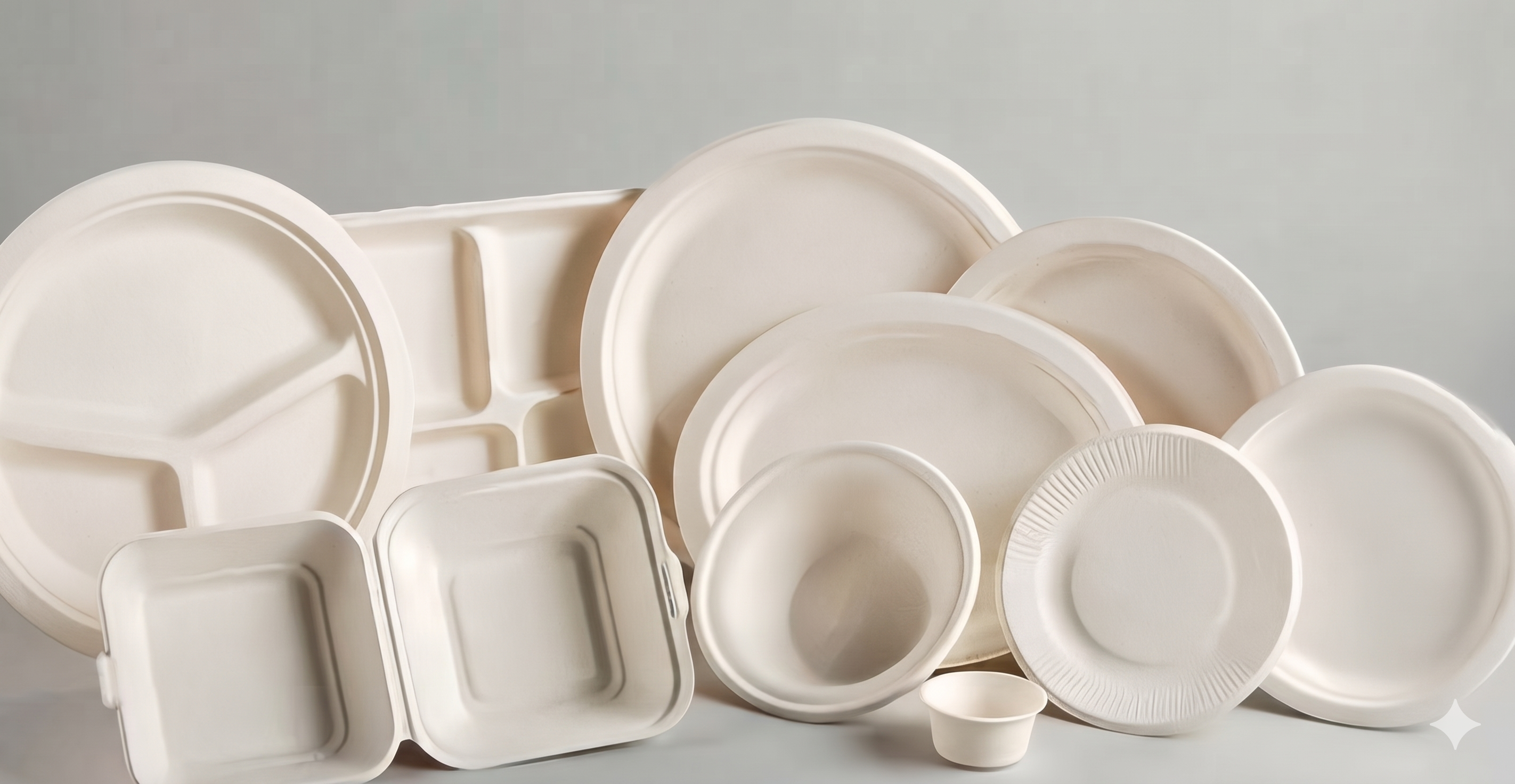
For a food business choosing a supplier is a key step in managing disposable tableware. The quality of the products the variety how easy they are to get the packaging used and delivery times can all influence how smoothly food-service operations run.
Ecog Products offers sugarcane bagasse items for businesses that want plant-based serving and packaging options. Their wide selection can work well across types of food-service needs—such as catering, restaurants, cafés, takeaway services, events and more.
For caterers having access to different formats makes things easier. Not every event has the kind of menu. A traditional wedding meal might need plates while a corporate lunch could be better served with compartment plates. A takeaway business may need bowls, trays or sealed containers.
Businesses looking for Sugarcane Bagasse Products and related packaging solutions in forms should consider Ecog Products. It’s important to focus on picking the product for the job at hand.
Companies that buy regularly should think about their event-based needs. They should talk with the supplier about how much they expect to use and plan ahead. This helps avoid last-minute orders and keeps inventory management simpler.
Whether the need is for Bagasse Plates for Catering, Bagasse Plates for Restaurants, Bagasse Plates for Takeaway or even food-service packaging, for events the best choice depends on the type of food the portion size, the way it will be served and how much is needed.
Frequently Asked Questions About Sugarcane Bagasse Plates
What are sugarcane bagasse plates made from?
Sugarcane bagasse plates are made from bagasse, the fibrous material remaining after sugarcane juice extraction. The fiber is processed into pulp and molded into plates and other food-service products.
Are bagasse plates suitable for catering?
Yes. Suitable bagasse plates can be used for weddings, corporate functions, festivals, parties, outdoor events, and other catering applications. The size and design should be selected according to the menu and serving requirements.
Can bagasse plates hold hot food?
Many bagasse plates are designed for hot food applications, but suitability depends on the individual product. Businesses should check the supplier's specifications for temperature, moisture, and intended use.
What is the difference between a regular bagasse plate and a compartment plate?
A regular plate provides one main serving area, while a compartment plate divides the surface into separate sections. Compartment plates are useful when different foods need to remain separated.
Are bagasse plates suitable for takeaway?
Flat plates can be useful for food serving, while takeaway businesses may prefer Bagasse Takeaway Containers, clamshell boxes, meal boxes, or hinged containers designed for transportation.
Are bagasse plates biodegradable?
Bagasse is a plant-based fiber, and many bagasse products are designed to be biodegradable. Businesses should verify the specifications of the particular product before making disposal or environmental claims.
Are bagasse plates compostable?
Many bagasse products are designed to be compostable under suitable conditions. The actual composting process depends on the product and the available composting environment.
Can restaurants and cafés use bagasse tableware?
Yes. Restaurants, cafés, cloud kitchens, takeaway businesses, and other food-service operations can select bagasse plates, bowls, trays, and containers according to their specific requirements.
Can businesses buy bagasse products in bulk?
Yes. Catering companies, restaurants, retailers, event organizers, supermarkets, and other commercial buyers can purchase bagasse products in bulk. Businesses should confirm quantity, packaging, availability, and delivery schedules before ordering.
What should businesses consider when choosing a bagasse supplier?
Businesses should consider product quality, size availability, range, packaging, supply consistency, delivery timelines, pricing, and the supplier's ability to meet recurring requirements. For larger orders, requesting samples before bulk purchasing can also be useful.