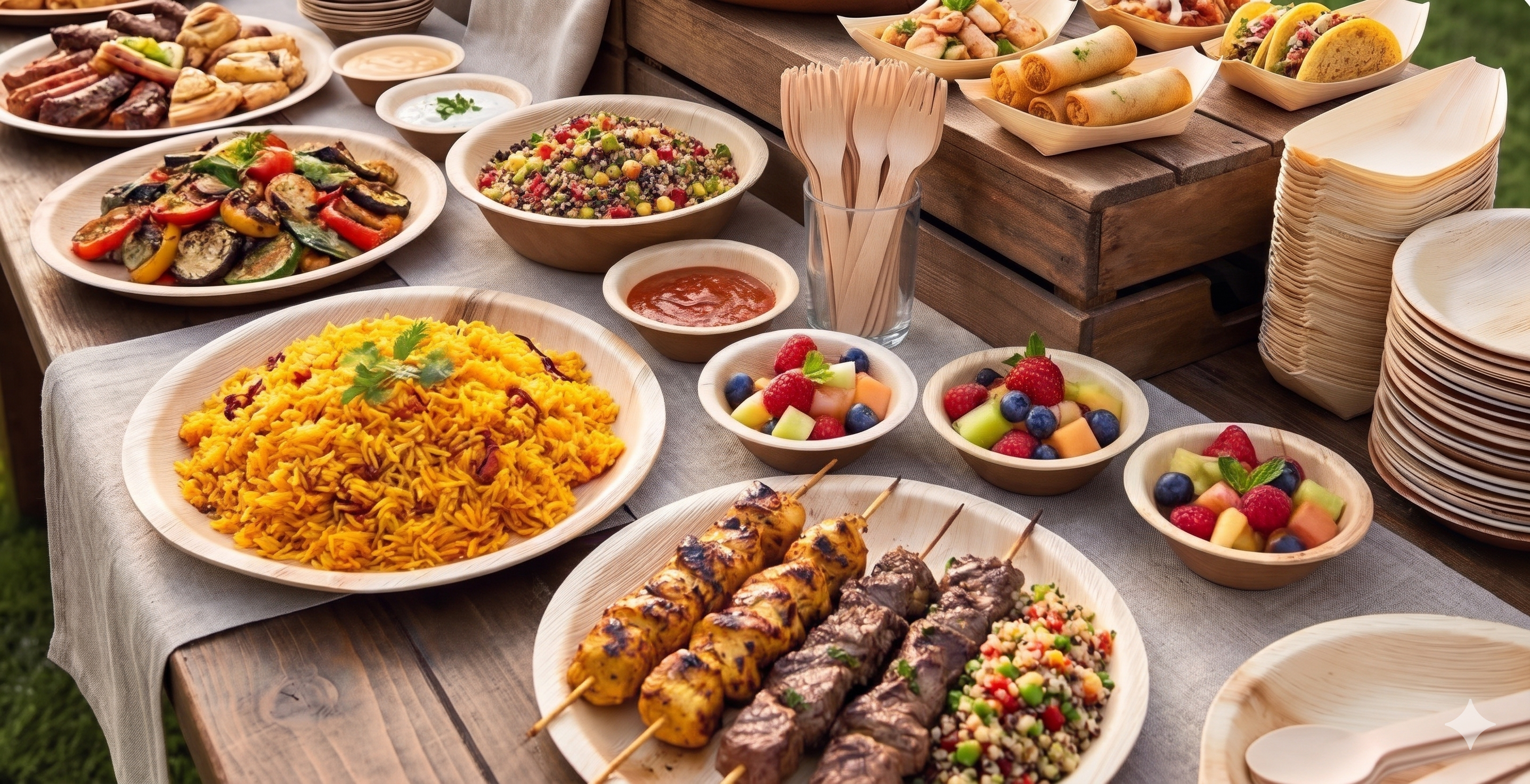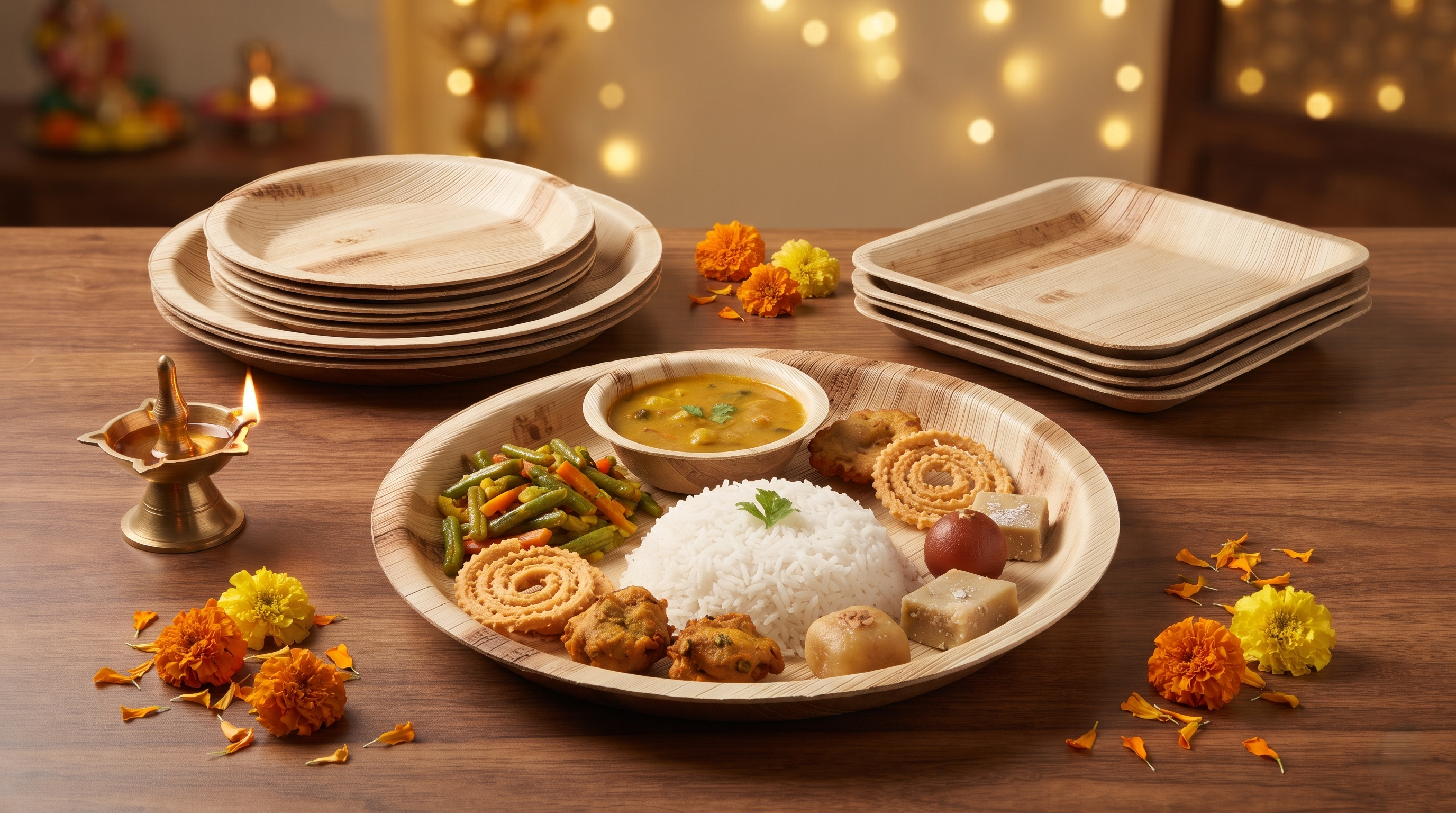


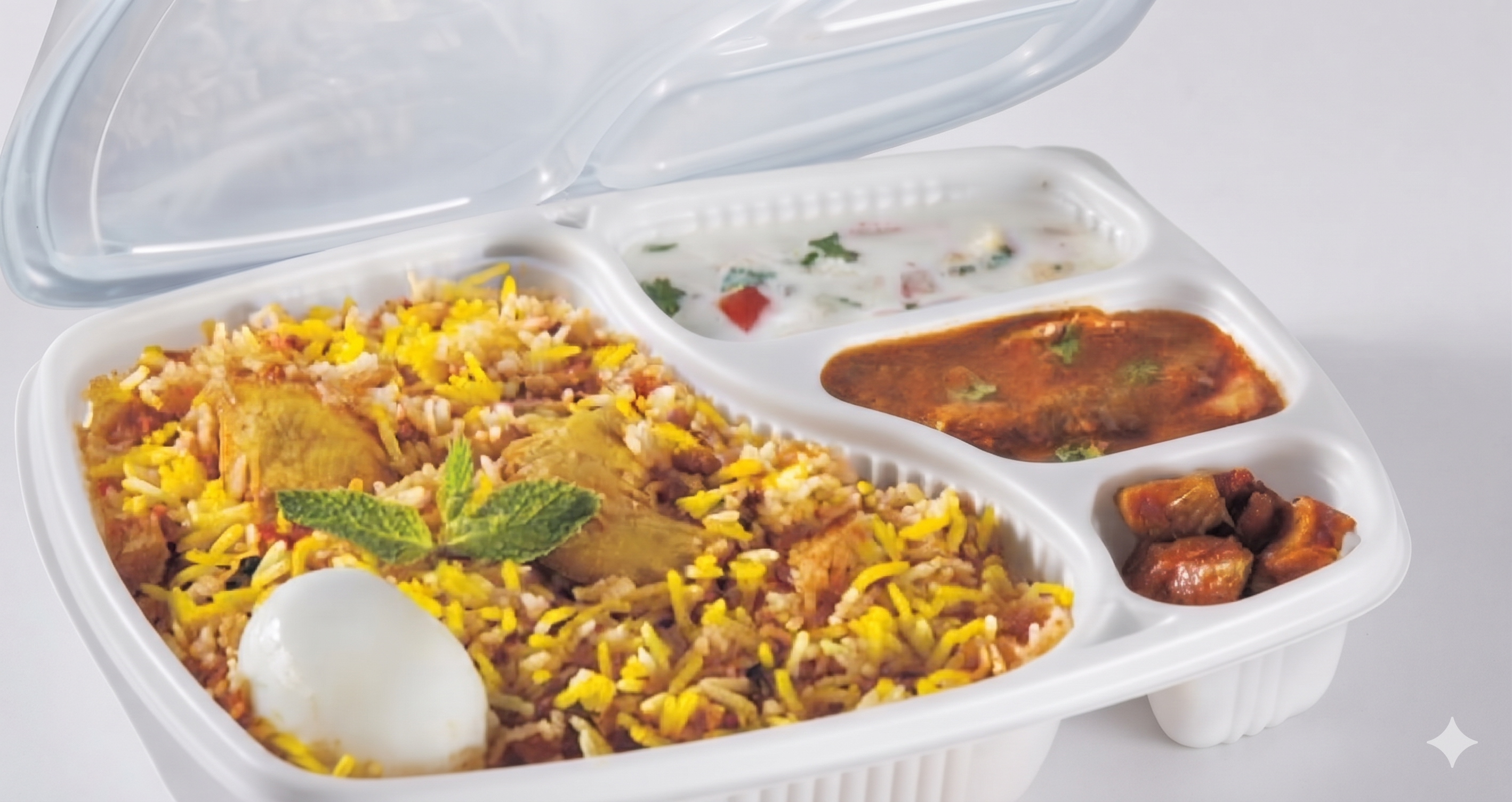

You’ve ordered biryani from your favourite place. Maybe a curry, maybe a full meal. The wait feels long, the bell finally rings, and you open the delivery bag. Gravy everywhere. The rice is soaked. The packaging is a mess. The food was freshly prepared, and it might still taste excellent, but the whole experience? Disappointing.
Restaurants, hotels, cloud kitchens and takeaway businesses all run into this. Food spillage is a common challenge, and it isn’t always down to delivery handling. Sometimes the real culprit is a food container box that can’t safely accommodate the food’s weight, temperature or consistency.
So what should you look for? The right food container box should match the food type, the portion size, the serving temperature and the delivery conditions. A strong container with a properly fitted lid can reduce leakage. It also helps protect food presentation, so the meal arrives looking the way it left your kitchen, and it makes takeaway orders easier to transport.
That’s why it’s worth understanding how different containers perform. It helps food businesses make practical packaging decisions without unnecessary expenses.
The Hidden Reasons Behind Food Leakage in Takeaway Orders
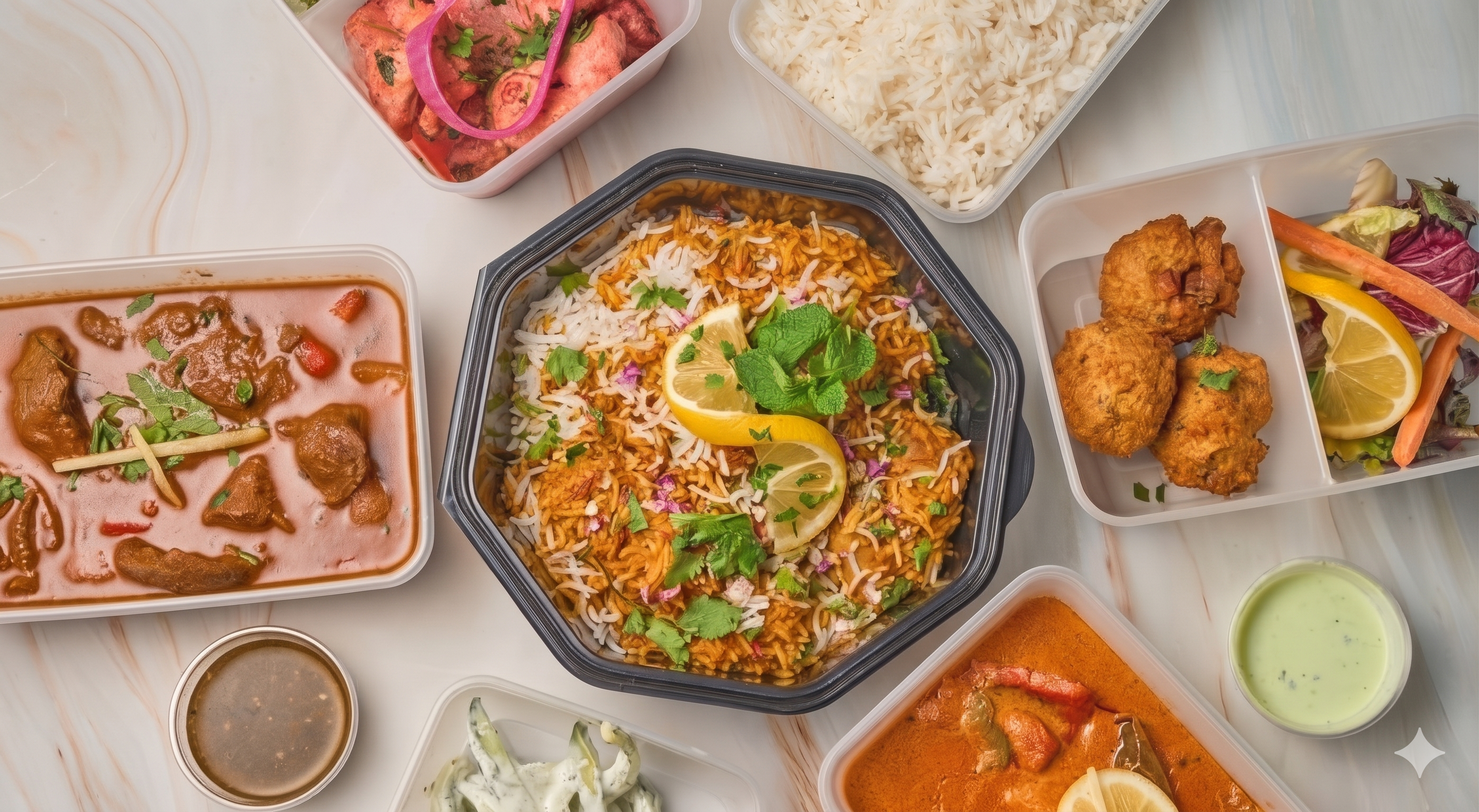
Food leakage during delivery often starts before the order even leaves the kitchen. It begins with small packaging mistakes that get overlooked during busy restaurant operations.
Here’s a common one: using containers that are unsuitable for liquid or semi-liquid foods. A lightweight box designed for dry snacks may work well for fried items. Put sambar, kurma or other gravy-based dishes in it, though, and it may not be suitable.
Overfilling is another major concern. Fill a container close to its maximum capacity, and the movement during transportation can force liquid towards the lid. If the closure is not secure, leakage becomes more likely.
A few other things add to the problem: damaged container edges, incorrectly fitted lids, excess pressure from stacking, and packaging materials that soften under heat.
Temperature matters too. Hot food releases steam, and that steam may affect the performance of certain containers and closures.
So preventing food leakage begins with one choice: selecting packaging designed for the actual food being delivered, rather than picking a container based only on appearance or price.
What Happens When Restaurants Use the Wrong Food Packaging?
Using unsuitable takeaway food packaging can affect much more than the condition of a single order. Here’s how it adds up.
Think about what your customer expects when they open the bag: a meal that’s clean, properly separated and ready to eat. Now picture the opposite. Food has spilled inside the delivery bag, sauces have mixed with other dishes, the packaging is difficult to handle, and the food presentation has suffered.
That’s where the trouble starts. Customer complaints, replacement requests, refunds and negative delivery reviews may all follow.
If you’re handling numerous orders each day, repeated packaging failures can also create additional operational expenses.
Your staff may need to repack orders or replace damaged food. They may spend extra time responding to customer concerns. And every container that fails before reaching the customer adds to your packaging waste.
Reliable restaurant food packaging helps protect the effort invested in preparing each meal. It supports consistent service, and it gives customers greater confidence when ordering again.
Essential Features Every Food Delivery Container Should Have
No single feature makes a container right for delivery. Choosing the right food delivery packaging means evaluating several practical features together.
Start with strength. A suitable container should be strong enough to support the food without bending or losing its shape. Then check the size. Its dimensions should accommodate the meal comfortably and still leave enough space for a secure closure.
Other important features to consider:
-
Food-contact suitability: The material must be suitable for the food you’re packing and the conditions it will be served in.
-
Secure lid closure: The lid should sit evenly and stay attached through ordinary handling.
-
Leak resistance: Depending on what you’re packing, the design should help contain moisture, oils or gravy.
-
Heat compatibility: If the container will hold hot food, it must be suitable for the intended filling temperature.
-
Stacking stability: When orders are arranged in delivery bags, the base and lid should stay stable.
-
Convenient handling: Kitchen staff should find the container easy to fill, close and organise.
Leak resistant food containers are particularly useful for dishes with sauces or moisture. Still, don’t assume any container is completely leakproof until you’ve tested it under realistic conditions.
In the end, the best choice is the one that balances food protection, ease of use and packaging cost.
Matching Food Container Types with Different Menu Requirements
Would you pack rasam and samosas in the same box? Probably not. Different dishes have different packaging needs. If your menu has biryani, curries, starters and desserts, you may require multiple container designs instead of one standard food packing container. Selecting packaging according to the menu helps maintain food quality, and it reduces avoidable leakage.
Containers for Rice and Full Meals
Rice dishes and complete meals require containers that can support generous portions without collapsing or becoming difficult to close.
Rectangular food containers are often the convenient pick for biryani, fried rice, noodles and other main courses. You can arrange the meal neatly in them, and they’re relatively easy to organise inside delivery bags. If the meal has several components, compartment food containers can help keep the rice, vegetables and accompaniments apart.
Before you settle on food containers for rice meals, think about portion weight and container depth. Leave enough space to close the lid without compressing the food.
Containers for Curries and Gravies
Curries and gravies need more attention, because liquid can move easily during transportation.
For sambar, rasam, kurma and gravy-based side dishes, round food containers with compatible, tightly fitting lids are commonly considered. Whichever curry container you use, it should have a secure closure and enough unused space, so movement doesn’t put excessive pressure on the lid.
Buying food containers for liquid food? Check whether the product has been tested for the required filling temperature and delivery conditions. A sealed outer bag may help contain accidental leakage, but treat it as a backup. It should not replace a properly closed primary container.
Containers for Snacks and Fried Foods
Fried food is a different story. With samosas, cutlets, pakoras, French fries and fried chicken, crispness is what you’re trying to protect. Seal them inside a tight box and trapped steam creates condensation, and they can lose their crispness.
Snack packaging still needs structural strength, but it should also account for moisture release. Depending on the dish, ventilated or appropriately designed paper-based packaging may be preferable. Keep sauces and dips in separate containers, too, so they don’t make the fried food soggy.
Containers for Salads and Cold Foods
With salads, fresh fruits and other cold food items, appearance matters. They benefit from packaging that protects how they look and keeps ingredients from getting crushed.
Clear food-grade containers can help, since customers can see the contents and the order stays organised. If the salad has a dressing, pack it separately to preserve texture and reduce excess moisture.
When chilling is required, the container should also be compatible with refrigerated storage. Remember, though, that packaging does not replace appropriate temperature control during food delivery.
Containers for Sauces and Side Dishes
Then there are the small extras: chutney, mayonnaise, pickles, dips and other accompaniments. Small portions like these need separate packaging, and compact containers with suitable closures can help keep them away from the main meal.
Choose containers according to the quantity being served, rather than using unnecessarily large boxes. Keeping sauces and side dishes separate improves food presentation, and customers can combine ingredients according to their preferences.
How Container Design Affects Food Safety During Transportation
A food container must do more than hold a meal. Think about everything it has to manage: hygienic handling, appropriate containment and reliable transportation. Its design should support all three. So when you choose food packaging for safe transportation, base it on the product’s characteristics and the delivery conditions you expect.
Secure Lid Fitting
Here’s a common trap. A lid can look shut and still leave small gaps around the container rim.
With food containers with tight lids, check that the fit is even on every side. Then handle the packed container a little. A good closure should not loosen easily. Before anything goes out, have staff inspect the lids, especially on curry, soup or other moisture-rich foods.
Container Strength and Thickness
Lift a weak container full of biryani and you might feel it flex. Container strength influences how well packaging performs under normal delivery pressure. Thin or poorly supported containers may bend when lifted or stacked, and the lid seal could be affected as a result.
A durable food container box should retain its intended shape when filled with the recommended quantity of food. But don’t go by thickness alone. A thicker box isn’t automatically a better one. Material composition, shape, reinforcement and manufacturing consistency also affect performance.
Leak and Spill Resistance
Spill resistant food containers are designed to reduce the chances of food escaping during handling. Notice the word “reduce”. Leak resistance depends on the complete container-and-lid system, the food being packed and how the package is transported.
Our advice? Before purchasing large quantities, test your selected containers with a few representative menu items. For particularly liquid dishes, a tested sealed container may be more appropriate than a standard snap-on takeaway box.
Proper Food Separation
Rice soaked in gravy. Crispy pakoras gone soft. When a meal includes components with different textures or moisture levels, food separation is important.
A compartment food container can keep rice away from gravy and prevent crispy foods from absorbing excess moisture. For highly liquid items, though, separately sealed containers are usually more reliable than compartments without individually sealed sections.
Get the separation right, and it improves presentation and gives customers more control over how they eat their meals.
Choosing Between Different Food Container Materials
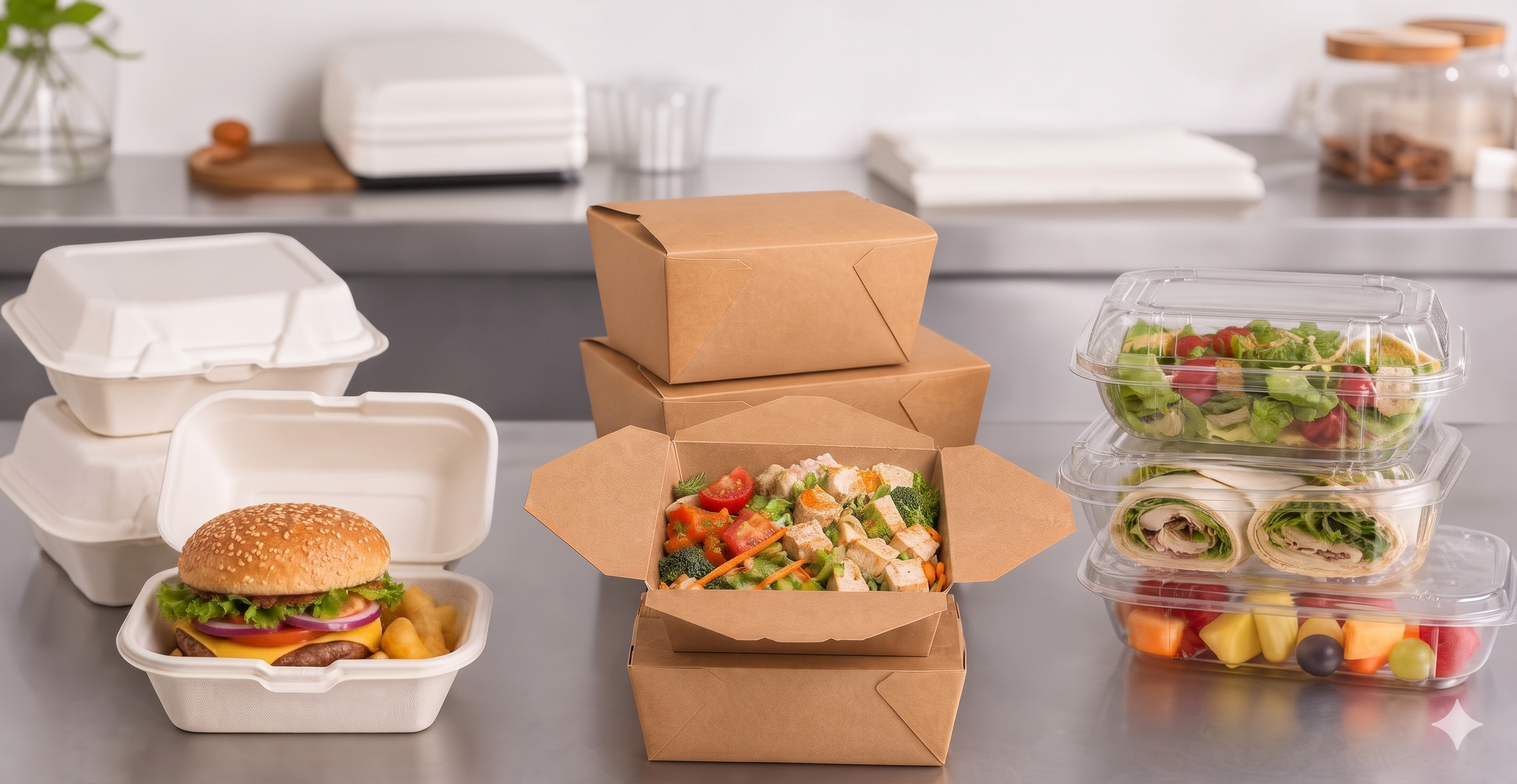
Food containers are available in several materials, each offering different benefits and limitations.
The appropriate material depends on the food temperature, moisture content, delivery duration, handling requirements and disposal considerations.
Plastic Food Container Boxes
A plastic food container box is commonly used for takeaway meals because different plastic formulations and designs offer lightweight handling, convenient storage and a range of shapes.
PP food containers, made from polypropylene, are among the options used for suitable hot-food applications. However, temperature tolerance varies by product, and restaurants should verify the manufacturer's specifications.
Microwavable food containers should only be described or used as microwave-safe when the particular container and lid are rated for that use.
Plastic takeaway boxes are available in round, rectangular and compartment formats, making them useful across different menus.
Businesses should also check applicable local restrictions on single-use plastics before selecting disposable plastic containers.
Sugarcane Bagasse Containers
Sugarcane bagasse containers are manufactured using fibrous material remaining after sugarcane processing.
They are commonly considered by businesses looking for fibre-based alternatives to conventional plastic food packaging.
These containers are available in various formats, including bowls, trays and meal boxes.
Their suitability for oily, wet or hot food depends on product construction, coatings and intended use.
Restaurants should verify food-contact suitability, liquid resistance and any compostability claims with the supplier rather than assuming every bagasse product performs identically.
Aluminium Food Containers
Aluminium food containers are frequently considered for baked dishes, certain hot meals and catering applications.
They can provide useful structural support, and some are compatible with conventional ovens when used according to the manufacturer's instructions.
However, aluminium containers are generally not suitable for ordinary microwave use unless the appliance and packaging instructions specifically permit it.
When packing acidic or salty foods, businesses should confirm that the particular product is suitable for the intended food and contact duration.
Compatible lids and appropriate secondary packaging may also be needed for transportation.
Paper-Based Food Containers
Paper-based food containers are widely used for snacks, bakery products, sandwiches and selected takeaway meals.
They can be lightweight and convenient for quick-service restaurants.
For oily or moisture-rich foods, suitable food-contact barriers or coatings may be necessary.
Not every paper box can hold gravy or withstand prolonged exposure to steam.
Restaurants should evaluate the material's resistance to moisture, grease and heat before using it for particular dishes.
The best packaging material is not automatically plastic, paper, aluminium or bagasse. It is the material that safely suits the food, handling conditions and business requirements.
How to Select the Right Container Capacity for Your Menu
Pick the wrong container size and it shows up in three places: packaging performance, food presentation and cost.
Too small, and someone in the kitchen ends up squeezing food in, so the chance of overfilling goes up. Too big, and the food has room to move excessively during delivery. The ideal capacity should account for the actual portion, the available headspace and the container manufacturer’s recommended filling limit.
Small Portions and Side Dishes
A spoonful of chutney and a ladle of sambar don’t need the same box. For chutneys, sauces, pickles, desserts and individual side dishes, small containers are useful.
Depending on your menu, nominal capacities around 50 ml to 250 ml may be considered. Getting the food parcel box size right helps you avoid unnecessary packaging material, and the accompaniments stay organised.
Regular Meal Portions
One serving should sit comfortably in the box. For certain rice dishes, noodles and meal combinations, nominal capacities around 500 ml to 1,000 ml may be useful starting points. Starting points, though. The correct choice depends on the actual recipe and portion weight.
If you pack biryani, measure a normal serving first. Don’t assume every 750 ml container will fit the same quantity. And the lid must close without pressing against the food or deforming the box.
Family Packs and Bulk Orders
Family meals and catering portions require either larger containers or several appropriately sized boxes. Depending on the dish and the packaging specifications available, businesses may consider containers above 1,000 ml.
That doesn’t mean everything goes into one giant box. Large quantities should not automatically be packed into a single oversized container. Heavy or liquid-rich dishes may be easier to handle when they’re divided into manageable portions.
Before you finalise a capacity, do a practical packing test. Use the heaviest and most moisture-rich items on your menu.
What Restaurants Should Look for in Takeaway Container Lids
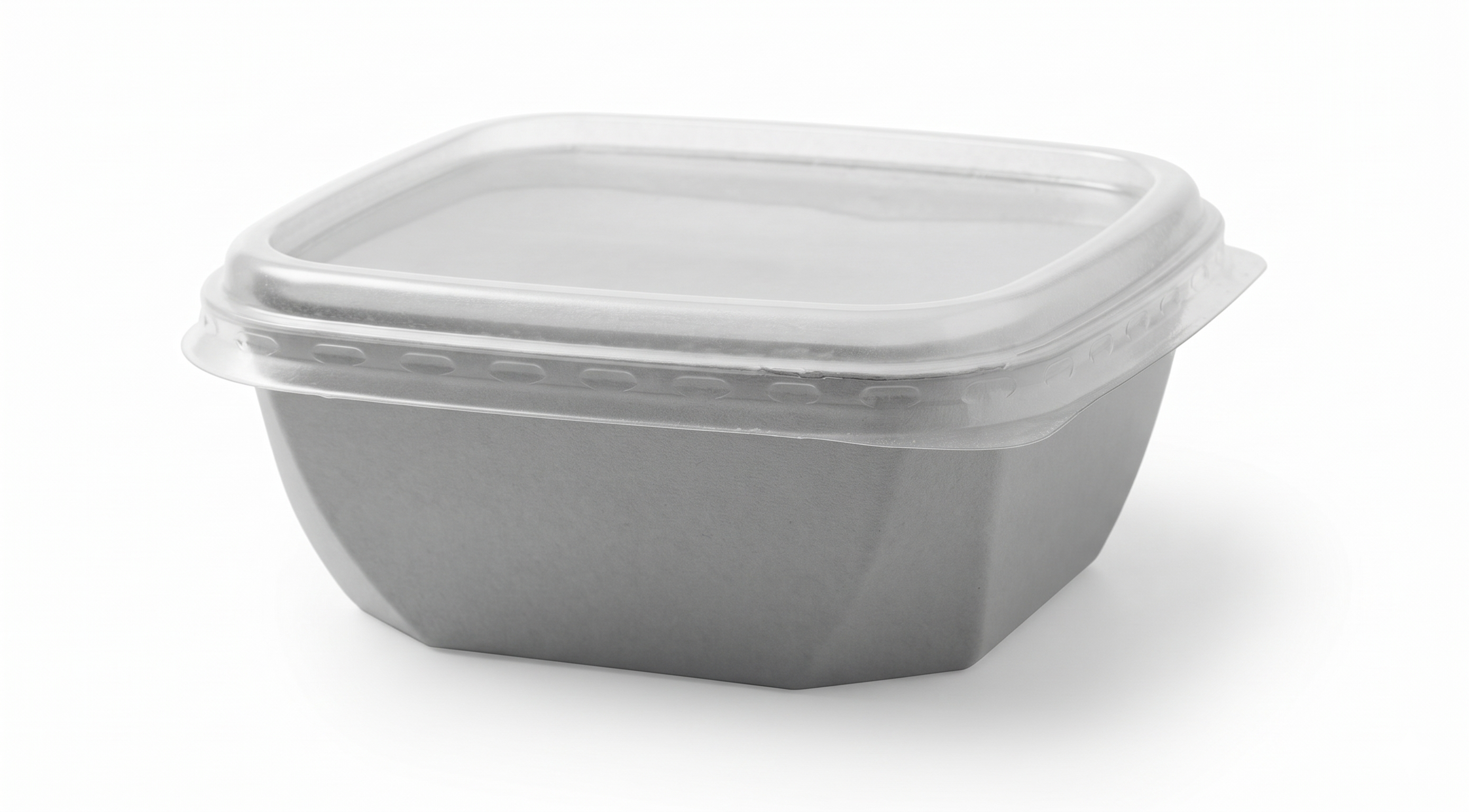
People tend to focus on the box, but the lid is one of the most important parts of any takeaway container. Pair a strong base with an unsuitable closure, and even that strong base can perform poorly.
So what makes a good lid? It should match the container’s dimensions, close consistently and remain secure under ordinary delivery handling.
Closures come in a few types. Some containers use snap-fit closures, while others have hinged lids, separate covers or sealing-film systems.
A hinged food container can make packing faster, because the lid stays attached to the base. Convenient? Yes. A guarantee of liquid-tight performance? No.
With curry and gravy packing containers, look closely at the rim design, the closure strength and the compatibility with the food temperature.
Need tamper evidence? Use a suitable tamper-evident seal or an outer security label. A tight-fitting lid alone does not necessarily show whether the package has been opened.
Finally, test complete containers with their intended lids. It helps restaurants avoid mismatched packaging components.
Packaging Mistakes That Lead to Customer Complaints and Food Waste
The good news? Many takeaway packaging problems can be prevented by addressing a few recurring mistakes.
Overfilling containers is one of the most common. Once food presses against the lid, the closure may become less reliable.
Another is choosing packaging solely because it has the lowest unit price. A cheaper container may look economical. Add up the repeated leakage, the damaged orders and the replacement costs, though, and the picture can change.
Mismatched parts cause trouble too. Mixing incompatible lids and bases can also cause leakage, particularly when they come from different product ranges or suppliers.
A few more to watch for: stacking heavy meals over delicate items, packing hot and cold foods together without appropriate separation, and using containers that are unsuitable for the food’s temperature.
Be careful with labels as well. Restaurants should avoid relying on unverified claims such as “completely leakproof”, “microwave-safe” or “reusable”.
Reducing packaging mistakes takes three things: product testing, clear packing instructions and regular checks during dispatch.
Practical Ways to Prevent Food Spillage Before Dispatch
Food spillage prevention becomes easier when restaurants follow a consistent packing process.
The first step is to match each menu item with an approved container type. A box suitable for fried rice should not automatically be used for a liquid curry.
Next, staff should fill containers within their practical limits, leaving enough headspace for secure closure.
Check that the lid is properly aligned and pressed into place along the entire rim.
For gravy and liquid dishes, use containers specifically tested for those applications. Place them upright in a stable delivery bag and consider appropriate secondary containment.
Avoid placing heavy containers directly on lighter or fragile packages.
Separate hot and cold items when necessary to support appropriate food temperatures.
A simple pre-dispatch checklist can include checking the container condition, lid closure, order quantity, item separation and bag arrangement.
Restaurants can also carry out controlled sample transportation tests to identify weaknesses before packaging reaches customers.
The most effective way to prevent food spillage during delivery is to combine suitable containers, correct filling practices, secure closures and careful transport handling.
How to Choose Food Containers for High-Volume Delivery Businesses
High-volume restaurants and cloud kitchens need packaging that performs consistently across hundreds of repeated orders.
When order volumes increase, even small variations in container quality can create operational problems.
Standardising packaging for frequently ordered menu items can simplify kitchen workflows.
For example, a cloud kitchen could assign separate packaging specifications for regular biryani, family biryani, curry portions, snacks and accompaniments.
This approach helps employees select the correct container quickly during peak service hours.
Stackable designs can also help businesses use available storage space more effectively, provided that the containers remain stable when packed.
Before choosing disposable meal boxes for large-scale operations, assess their filling convenience, closure consistency, storage requirements and suitability for delivery bags.
Staff feedback is valuable because employees handling the containers daily can identify recurring issues.
Packaging standardisation should reduce mistakes without forcing every food item into the same box.
What to Check Before Purchasing Food Container Boxes in Bulk
Buying food container boxes in bulk can support stock availability and consistent restaurant operations, but purchasing decisions should go beyond the quoted price.
First, confirm that the selected containers match the menu's food types, temperatures and portion sizes.
Ask prospective food packaging suppliers about material specifications, lid compatibility, nominal capacity and intended uses.
For food-contact packaging in India, businesses should also seek relevant compliance documentation. The Food Safety and Standards (Packaging) Regulations require food-contact materials to be food-grade and appropriate for their intended conditions.
Evaluate sample containers before placing a large order. Test them with hot meals, gravies and normal packing methods where relevant.
When comparing food container box prices, calculate the total packaging cost per completed order rather than examining only the price per empty box.
Include lids, sealing materials, secondary bags, wastage and transportation costs in the comparison.
Businesses searching for disposable food container suppliers should also check minimum order quantities, available stock, delivery schedules and consistency between batches.
Restaurants looking for food container suppliers in Coimbatore can benefit from discussing their menu requirements and bulk purchasing needs with a local packaging business.
A practical bulk purchasing decision should balance product suitability, quality consistency, availability and overall cost.
Why Choose Ecog Products for Food Container Boxes?
Packaging decisions are simpler when you can talk them through with a supplier that understands different food-service applications.
At ECOG Products in Coimbatore, we offer food-service products and disposable packaging options, including eco-friendly tableware and sugarcane-based products.
Whether you run a restaurant, a hotel, a catering business or a cloud kitchen, you can explore suitable packaging options based on the types of meals you serve, your expected order volumes and your operational needs.
You might be comparing food containers for takeaway, or looking at meal packaging and complementary disposable products alongside them. Either way, it’s worth reviewing the available formats before purchasing. It helps prevent mismatched selections.
If you’ve been searching for food packaging suppliers in Coimbatore, we’re a local point of contact for product enquiries and availability discussions.
One thing before you order: please confirm the specific container types, materials, lid options, food-contact specifications and bulk availability with us.
Have a look through the ECOG Products packaging range, or get in touch with our team to discuss suitable food-service packaging for your business.
Final Thoughts on Choosing the Right Food Container Box
Cooking a great meal is only part of the job. Food delivery quality depends on what happens after a meal leaves the kitchen, as well as how it is prepared.
That’s where the right food container box comes in. It helps protect meals from avoidable leakage, maintain presentation and simplify takeaway handling.
Before choosing containers, think about the food’s consistency, serving temperature, portion size and delivery conditions. Secure lids, suitable materials, adequate capacity and reliable packing practices all matter.
So don’t rely on one packaging type for every menu item. Test containers against your specific requirements. That’s how businesses can achieve better results.
Choosing suitable food packaging supports smoother operations, reduces avoidable waste and gives customers a more dependable takeaway experience.
Frequently Asked Questions About Food Container Boxes
Which food container is best for preventing leakage?
A container specifically designed and tested for liquid or moisture-rich foods is generally the best choice. Look for a compatible secure lid, a stable container body and adequate capacity. Actual leak resistance should be verified with the food and transportation conditions involved.
How do I choose containers for curry and gravy?
Choose containers suitable for liquid foods, with lids that fit evenly and remain secure during handling. Check heat compatibility and leave sufficient headspace. Test the filled container upright and under controlled delivery movement before regular use.
Are plastic containers suitable for hot takeaway food?
Some food-grade plastic containers, including certain polypropylene products, are suitable for hot food. However, suitability depends on the specific material and manufacturer's temperature rating. Never assume that all plastic takeaway containers can safely hold hot food or be microwaved.
Why is a tight-fitting lid important for food delivery?
A tight-fitting lid helps keep food contained when a package is lifted, stacked or moved during transportation. It can reduce accidental spills and help maintain hygiene. However, a tight lid does not automatically make every container liquid-tight or tamper-evident.
Which container size is suitable for restaurant meals?
Container size depends on the dish and serving quantity. Some regular meals may fit in containers around 500 ml to 1,000 ml, while side dishes need smaller sizes and family packs may require larger formats. Testing actual portions is the most reliable way to determine capacity.
Can food containers be reused?
Only containers specifically designed for repeated use should be reused, following the manufacturer's cleaning and usage instructions. Single-use containers should not be assumed suitable for repeated heating, washing or storage. Replace reusable containers when they become damaged, deformed or difficult to clean.
Where can restaurants buy food containers in bulk?
Restaurants can approach food packaging wholesalers and suppliers that cater to hotels, takeaway businesses and cloud kitchens. Businesses in Coimbatore can also contact ECOG Products to enquire about its current packaging range, available quantities and suitable food-service options.